Kitesurfing Cumbuco
Ceará, Brazil
Wind & Conditions
Trade wind (alísios) blows SE (16–25 kt) side-onshore from the right; thermally boosted by the dunes; downwind corridor toward Lagoa de Cauipe.
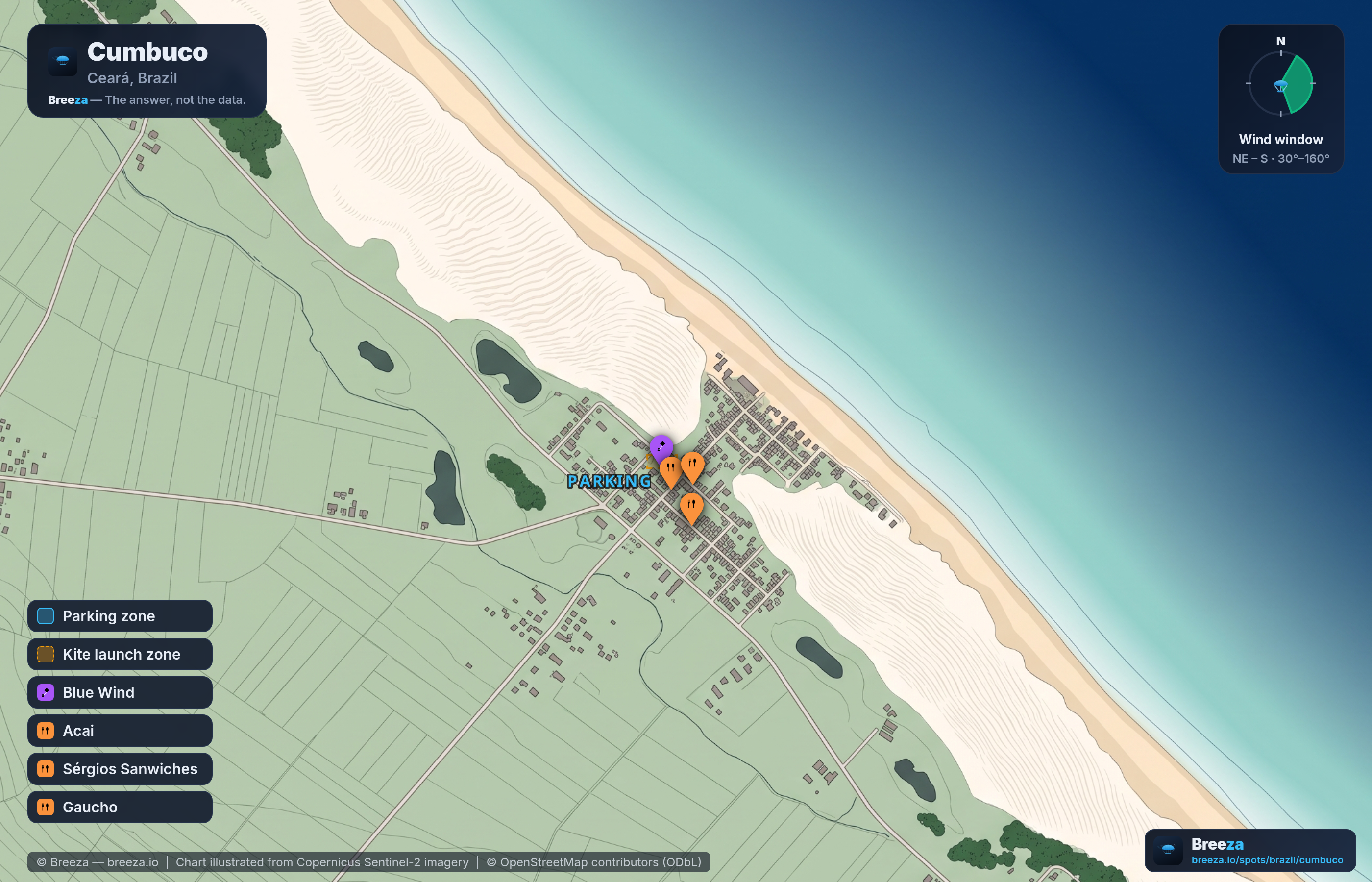
About Cumbuco
Cumbuco sits on a curved stretch of coastline about 35km west of Fortaleza, Ceará's capital, making it one of South America's most accessible world-class kitesurf destinations. The village straddles a low headland flanked by pale sand beaches, with the main kite beach opening to the northeast where the trade winds arrive with remarkable consistency. Getting there is straightforward — taxis and transfer vans from Fortaleza take roughly 45 minutes depending on traffic, and the road runs all the way to the beach. Parking near the kite zone is possible, though the access track can get soft in places. The launch area is a wide, open beach with a gentle slope; Blue Wind and other schools on the beach keep the zone reasonably organized, with launches from a dedicated strip to keep swimmers clear. The wind here is the alísios — the Southeast trade wind — blowing side-onshore from your right as you face the water. It typically kicks in solidly by late morning and builds through the afternoon, thermally amplified by the heat rising off the dune fields immediately behind the beach. That thermal boost is what makes Cumbuco reliable: even on lighter trade-wind days, you can expect something by 1pm. Speeds typically sit in the 16–25 knot range through the main season, with stronger days pushing above that. The water character varies along the stretch. The near-shore zone has light chop and some small swell on windier days — workable for most skill levels. Ride far enough downwind and you reach Lagoa de Cauipe, a sheltered tidal lagoon where the water goes dead flat. The downwind run to Cauipe (roughly 6–7km) is a rite of passage for visitors; local taxi boats or beach buggies shuttle you back. Be aware of the sandbar and shallows where the lagoon meets the open beach — it looks inviting but can sneak up on you at lower tide. Hazards to watch: the beach gets busy in the kite zone, particularly at weekends and during peak season, so situational awareness on launches and landings matters. The current runs parallel to shore in a mostly predictable direction, but stronger days can push you downwind faster than expected if you are not actively tracking your position. Fishing boats and kayak operators share the water near the village — give them room. Facilities are solid for a spot of this calibre. Blue Wind kite school operates on the beach for lessons and equipment rental. After a session, the stretch of bars and restaurants behind the beach handles everything from post-session açaí to grilled seafood; Bar Laranja Mecânica and Gaucho are popular stops. Bacana and Chico do Caranguejo Cumbuco work well for cold drinks and local food. Best season runs July through January, when the alísios are most consistent. August and September are typically the strongest and most reliable months — 20-plus knot days stack up one after another. The shoulder months of June and February can be good but more variable. Avoid March through May: this is the rainy season, winds drop, and conditions become unreliable. Cumbuco suits confident beginners through advanced riders. The open beach and consistent wind make it a genuine learning spot, but the crowds, current, and downwind drift mean total beginners should stay close to the school setup. For experienced riders, the lagoon run and stronger afternoon sessions are genuinely excellent.
Best Season
The best season at Cumbuco runs Jul–Jan. Outside this window conditions are less reliable; Breeza checks the live forecast and tells you whether your specific time slot is still rideable.
World Ranking
#10 worldwideRanked #10 in the world — a kitesurf destination.
Facilities & Services
What's on the ground near the launch, mapped from open data:
Nearby spots to eat, drink & learn
- SKP-Brasil Kiteschule Cumbuco / Downwinder Kite school
- Cumbuco Kite School Kite school
- Wind Coast Kiteboarding Kite school
- Praia do Cumbuco Kite school
- Vento Brasil Kiteschool Kite school
- Blue Wind Kite school
- Living Restaurant
- Deca do Cumbuco Restaurant
- Sabor do Praia Restaurant
- Gaucho Restaurant
- The Point Restaurant
- Exil Restaurant
- Chico do Caranguejo Cumbuco Bar / Café
- Bacana Bar / Café
- Bar Laranja Mecânica Bar / Café
- Residence Kariri Beach Cumbuco Accommodation
- Sunshine Villa Cumbuco Accommodation
- Duro Beach Hotel Cumbuco Accommodation
- Café da villa Accommodation
- Pousada Cumbuco Green Accommodation
- Hotel Pousada Cumbuco Gold Accommodation
- 0031 Boutique hotel Cumbuco Accommodation
Facilities data © OpenStreetMap contributors
When is the best time to kitesurf at Cumbuco?
The prime season runs Jul–Jan. Outside these months the wind is less consistent — checking the live forecast before you head out is especially important. Breeza tells you if today's window is actually worth it for your gear.
Is Cumbuco suitable for beginner kiters?
Suitability depends heavily on the day's conditions. Breeza reads your level alongside the forecast and gives you an honest verdict — including when it's a no.
What wind direction works at Cumbuco?
Trade wind (alísios) blows SE (16–25 kt) side-onshore from the right; thermal... Breeza cross-references live wind direction against the spot's safe window to tell you if today's direction is rideable for your kite.
What kite size do you need at Cumbuco?
Kite size at Cumbuco depends on the day's wind strength and your weight. Most kiters rig between 10m and 14m. Breeza calculates the ideal size for your gear, so you know before you leave whether it's a go.
Is it safe to kitesurf at Cumbuco?
Safety at Cumbuco depends on conditions and your experience. Check for offshore-wind days, local hazards and emergency contacts before you launch. Breeza gives a rideability verdict that includes a safety flag when conditions are borderline for your level.
See if Cumbuco is ridable right now — wind, direction, and a verdict for your gear.
Free · iOS & Android
You've already got wind data — the hard part is knowing what it means for you. Most kiters end up checking two, three, four apps and still asking: can I actually go? Breeza was built by a kiter who had the same problem. Feed it your gear, weight and level and it tells you if Cumbuco is rideable right now. The answer, not the tabs.
Get the app Free on iOS and Android — see if Cumbuco is rideable right now.Nearby Kitesurf Spots
Sources
- http://www.skp-brasil.com/
- http://www.cumbucokiteschool.com.br/
- http://www.windcoastkite.com.br/
- https://linkme.bio/sunshineinncentro
- https://mariaseverina.com.br/jans-page
- https://www.durobeach.com/
- http://www.0031.com/
- https://web.kite-and-windsurfing-guide.com/spots/kiteboarding-windsurfing-sup/cumbuco.html