Kitesurfing Cabarete
Puerto Plata, Dominican Republic
Wind & Conditions
Trade winds, side-onshore, flat water inside reef
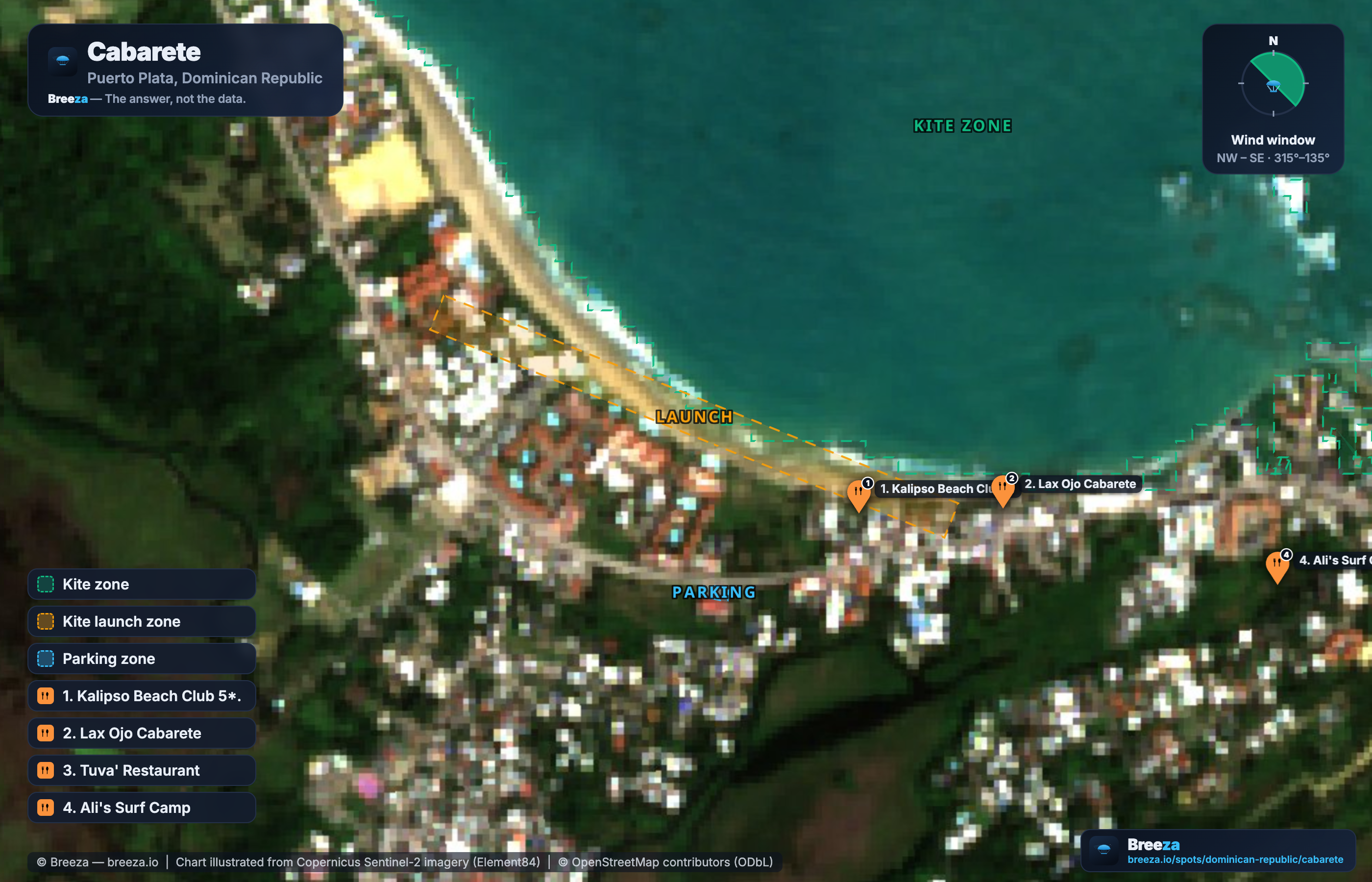
About Cabarete
Cabarete Bay is a bay on the northern coastline of the Dominican Republic. The bay is formed by a barrier coral reef and is a popular destination for kitesurfers.
Photos

Best Season
The best season at Cabarete runs Jan, Feb, Mar, Apr, Jun, Jul, Aug, Dec. Outside this window conditions are less reliable; Breeza checks the live forecast and tells you whether your specific time slot is still rideable.
World Ranking
#3 worldwideRanked #3 among the world's kitesurf destinations.
Location
Cabarete, Puerto Plata, Dominican Republic, Dominican Republic
Lat: 19.7496208, Lon: -70.4139298
Facilities & Services
What's on the ground near the launch, mapped from open data:
Nearby spots to eat, drink & learn
- Kitesurfing School Cabarete Kite school
- Cabarete Kite Point Kite school
- Laurel Eastman Kiteboarding Kite school
- KITE LAND CABARETE KITEBOARDING SCHOOL Kite school
- AGK Kite School in Cabarete, Dominican Republic Kite school
- Riki Wingfoil Wing kitesurf Cabarete Kite school
- Progress Kitesurf Kite school
- Kite Beach Inn Kite school
- Laurel Eastman Kiteboarding School (LEK) Kite school
- Kalipso Beach Club 5*. Restaurant
- Mojito Bar Restaurant
- Gypsy Bowls Restaurant
- Yamazato Cabarete Restaurant
- tamar Restaurant
- Ali's Surf Camp Restaurant
- Vagamundo Coffee & Waffles Restaurant
- Cabarete Coffee Company Bar / Café
- Fresh Fresh Bar / Café
- The Bar at Bahia Bar / Café
- Hotel Kaoba Accommodation
- Hotel Villa Taina Accommodation
- Wing Camp Hostel Cabarete Accommodation
- Albatros Cabarete Accommodation
- Viva Tangerine by Wyndham Accommodation
- Millennium Resort & Spa Accommodation
- Hummingbird Hotel Cabarete Accommodation
Facilities data © OpenStreetMap contributors
When is the best time to kitesurf at Cabarete?
The prime season runs Jan, Feb, Mar, Apr, Jun, Jul, Aug, Dec. Outside these months the wind is less consistent — checking the live forecast before you head out is especially important. Breeza tells you if today's window is actually worth it for your gear.
Is Cabarete suitable for beginner kiters?
Suitability depends heavily on the day's conditions. Breeza reads your level alongside the forecast and gives you an honest verdict — including when it's a no.
What wind direction works at Cabarete?
Trade winds, side-onshore, flat water inside reef Breeza cross-references live wind direction against the spot's safe window to tell you if today's direction is rideable for your kite.
What kite size do you need at Cabarete?
Kite size at Cabarete depends on the day's wind strength and your weight. Most kiters rig between 10m and 14m. Breeza calculates the ideal size for your gear, so you know before you leave whether it's a go.
Is it safe to kitesurf at Cabarete?
Safety at Cabarete depends on conditions and your experience. Check for offshore-wind days, local hazards and emergency contacts before you launch. Breeza gives a rideability verdict that includes a safety flag when conditions are borderline for your level.
See if Cabarete is ridable right now — wind, direction, and a verdict for your gear.
Free · iOS & Android
You've already got wind data — the hard part is knowing what it means for you. Most kiters end up checking two, three, four apps and still asking: can I actually go? Breeza was built by a kiter who had the same problem. Feed it your gear, weight and level and it tells you if Cabarete is rideable right now. The answer, not the tabs.
Get the app Free on iOS and Android — see if Cabarete is rideable right now.Nearby Kitesurf Spots
Sources
- https://prokitecabarete.com/
- https://www.elkaoba.com/
- http://villataina.com/
- http://www.hotel-cabarete.com/
- https://cabaretekitepoint.com/
- https://yamazato.com.do/
- https://vivaresortsbywyndham.com/viva-tangerine/?utm_source=google&utm_medium=organic&utm_campaign=GoogleMyBusiness&partner=14806
- https://laureleastman.com/
- https://kitelandschooldr.com/
- https://kiterr.com/kiteschools/agk-kite-school/
- https://rikiwingcabarete.com/
- https://championkiteboarding.com/
- http://www.progresskitesurf.com/
- https://www.millenniumcabarete.com/
- http://vagamundocoffeeandwaffles.com/
- https://www.prokitecabarete.com/
- http://www.kitebeachinn.com/
- http://www.hummingbirdcabarete.com/
- https://www.reddit.com/r/Kiteboarding/comments/1475c39/kiteboarding_lessons_in_cabarete/
- http://www.laureleastman.com/
- https://commons.wikimedia.org/wiki/File%3AFlickr_-_ronsaunders47_-_BOAT_BACK_TO_SHORE..jpg
- https://en.wikipedia.org/wiki/Cabarete_Bay