Kitesurfing Tarifa
Andalucia, Spain
Wind & Conditions
Levante / Poniente, strong thermal in summer
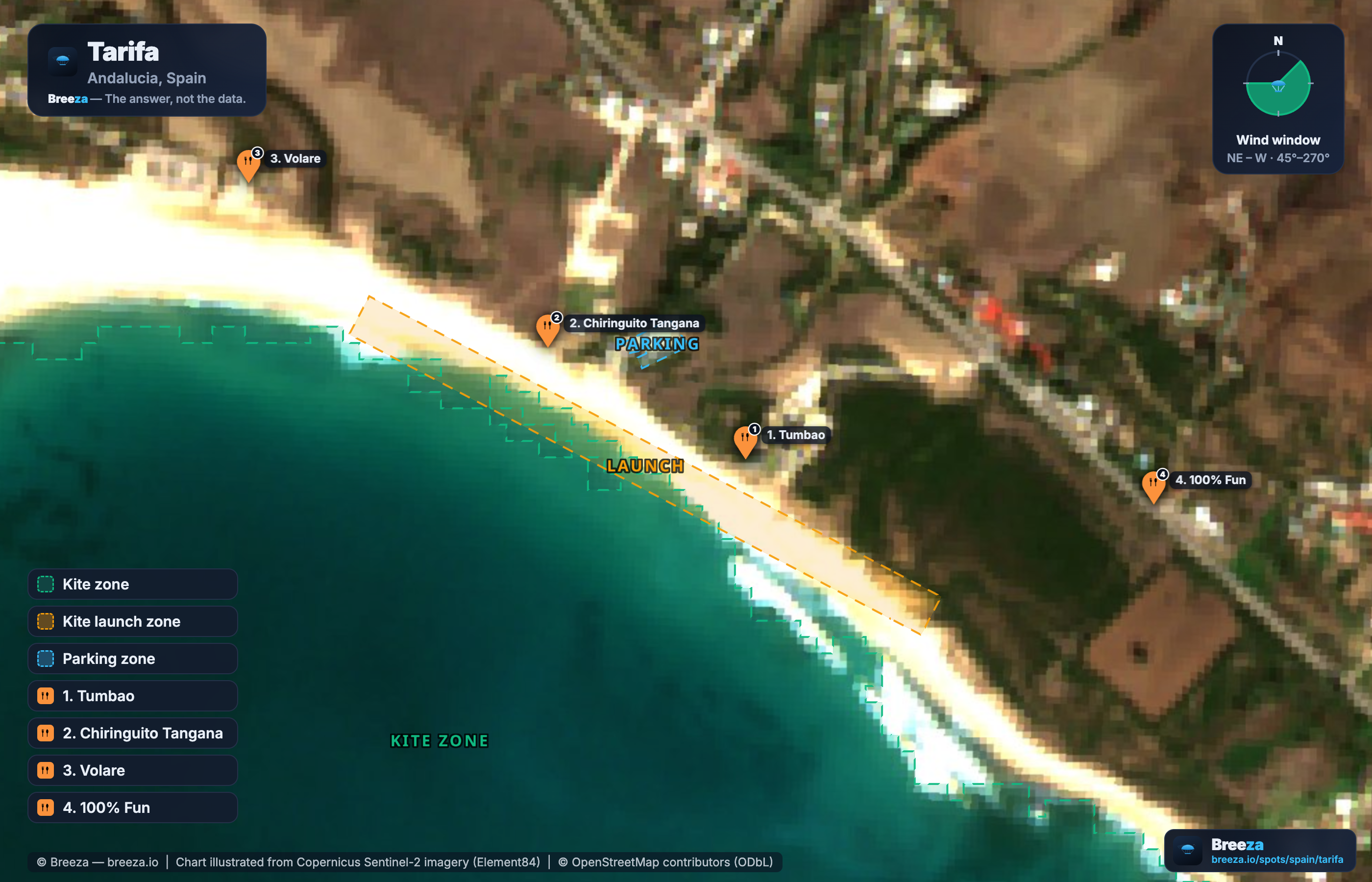
About Tarifa
Tarifa is a Spanish municipality in the province of Cádiz, Andalusia. Located at the southernmost end of the Iberian Peninsula, it is primarily known as one of the world's most popular destinations for windsports. Tarifa lies on the Costa de la Luz and across the Strait of Gibraltar facing Morocco.
Best Season
The best season at Tarifa runs Apr–Oct. Outside this window conditions are less reliable; Breeza checks the live forecast and tells you whether your specific time slot is still rideable.
World Ranking
#1 worldwideRanked #1 among the world's kitesurf destinations.
Facilities & Services
What's on the ground near the launch, mapped from open data:
Nearby spots to eat, drink & learn
- Matos Tarifa Kitesurf School Kite school
- KITE OBSESSION - Escuela de Kitesurf Tarifa Kite school
- Tarifa Kitesurf Academy | Escuela de Kitesurf & Wingfoil Kite school
- Kiteboarding Club Tarifa Kite school
- Surfin' Tarifa Surf and Kitesurfing School Kite school
- Addict Kite School Kite school
- Kitesurf School Freeride Tarifa Kite school
- Kite and Roll, Escuela de Kitesurf en Tarifa Kite school
- Manoli's Restaurant
- El Tapeo Restaurant
- La trastienda Restaurant
- Yi-Yuan Restaurant
- LiA me Restaurant
- Lalo's Pizza Restaurant
- El Abuelo Bar / Café
- Espresso bar Numero C Bar / Café
- Wanaka Bar / Café
- Nacor Bar / Café
- Café Bianco Bar / Café
- El Torreón Bar / Café
- Chiringuito Tangana Bar / Café
- Hotel Hurricane Accommodation
- Hotel Dulce Nombre , Valdevaqueros .Tarifa Prime Accommodation
- Kampaoh Tarifa Accommodation
- Hotel Copacabana Tarifa Beach Valdevaqueros Accommodation
- Tres mares Accommodation
- Hotel La Peña Accommodation
Facilities data © OpenStreetMap contributors
When is the best time to kitesurf at Tarifa?
The prime season runs Apr–Oct. Outside these months the wind is less consistent — checking the live forecast before you head out is especially important. Breeza tells you if today's window is actually worth it for your gear.
Is Tarifa suitable for beginner kiters?
Suitability depends heavily on the day's conditions. Breeza reads your level alongside the forecast and gives you an honest verdict — including when it's a no.
What wind direction works at Tarifa?
Levante / Poniente, strong thermal in summer Breeza cross-references live wind direction against the spot's safe window to tell you if today's direction is rideable for your kite.
What kite size do you need at Tarifa?
Tarifa delivers consistent wind, so most riders use a 9–12m kite under typical conditions. Exact size depends on your weight and the day's strength. Breeza calculates the right kite for your specific setup and gives you a rideability verdict before you head out.
Is it safe to kitesurf at Tarifa?
Safety at Tarifa depends on conditions and your experience. Check for offshore-wind days, local hazards and emergency contacts before you launch. Breeza gives a rideability verdict that includes a safety flag when conditions are borderline for your level.
See if Tarifa is ridable right now — wind, direction, and a verdict for your gear.
Free · iOS & Android
You've already got wind data — the hard part is knowing what it means for you. Most kiters end up checking two, three, four apps and still asking: can I actually go? Breeza was built by a kiter who had the same problem. Feed it your gear, weight and level and it tells you if Tarifa is rideable right now. The answer, not the tabs.
Get the app Free on iOS and Android — see if Tarifa is rideable right now.Nearby Kitesurf Spots
Sources
- https://matos-tarifa.com/
- https://www.hotelhurricane.com/
- https://www.hoteldulcenombre.com/
- https://www.cafedelmarbeach.com/es/?ref=GMB
- http://www.kiteobsession.com/
- http://www.kitewildtarifa.surf/
- https://www.kiteboarding-club.com/tarifa/?L=1
- https://surfintarifa.com/
- https://es.kampaoh.com/tarifa-cadiz-andalucia/?utm_source=googlemybusiness&utm_medium=search&utm_campaign=link-my-business&utm_term=&utm_content=description
- https://www.copacabanatarifa.com/
- https://www.addictkiteschool.com/
- http://www.tresmareshotel.com/
- https://maps.google.com/?q=place_id:ChIJdfIghqOODA0RZLVNDs9gEfE
- https://kiteandrolltarifa.com/?utm_source=google-my-businnes&utm_medium=enlace-web&utm_campaign=junio&utm_term=home
- http://www.beachbartarifa.com/
- http://www.hotellapenatarifa.com/
- https://www.dragontarifa.com/
- https://en.wikipedia.org/wiki/Tarifa