Kitesurfing Paje
Zanzibar, Tanzania
Wind & Conditions
Two monsoon seasons (Kusi from the SE, Kaskazi from the NE) both deliver steady side-onshore wind at an east-facing lagoon spot with a sheltering coral reef.
About Paje
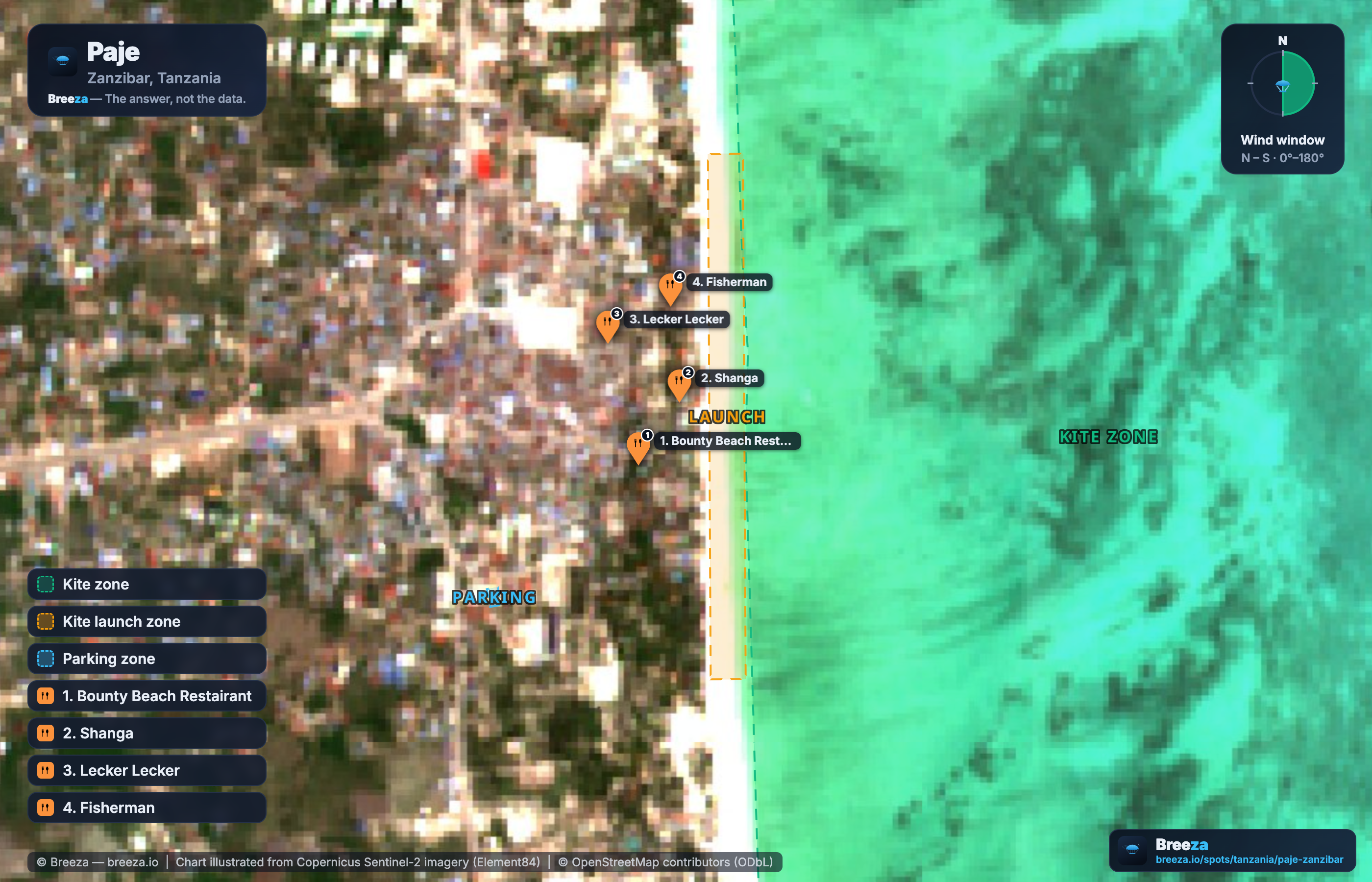
Paje sits on Zanzibar's east coast, roughly 45 minutes southeast of Stone Town by car, where a broad coral reef runs parallel to the shore and creates one of the Indian Ocean's most forgiving kite lagoons. The beach is a long strip of powder-white sand fringed with casuarina trees, and the village behind it has grown steadily around the kite scene — schools, guesthouses, restaurants, and beach bars all within walking distance of where you launch. Getting here is straightforward. From Stone Town's Darajani area, shared dala-dalas run the route for a few hundred shillings, or a private taxi runs around $25–35. Vehicles park on the sandy track behind the beach. If you're travelling with a kite bag, book a taxi with luggage space — dala-dalas get packed. The launch is the beach itself: flat sand, no rocks, gentle slope into the water. At high tide you have knee-to-waist-deep water between the sand and the open lagoon. At low tide the reef flat can expose almost completely, leaving ankle-deep water over coral for hundreds of metres. This is the defining character of Paje — conditions shift dramatically with the tide, and timing your sessions matters more than at most spots. Inside the lagoon the water is warm (26–29°C), flat to light chop, and extraordinarily clear. The reef absorbs Indian Ocean swell before it reaches you, so the surface inside stays manageable even in strong wind. The side-onshore angle — SE during Kusi, NE during Kaskazi — means drift tends to push you along the beach rather than offshore, which is reassuring if something goes wrong. That said, the reef is a real hazard: it's live coral, it's sharp, and at low tide sections of it are exposed. Riding near the reef edge in strong wind requires solid body-drag skills and good situational awareness. Paje runs on two monsoon windows. The Kusi blows June through October from the SE, typically 15–25 knots with solid consistency — this is the main season and the beach gets busy. The Kaskazi arrives in December and runs through February or early March, bringing NE wind at similar speeds, slightly less consistent but with fewer people around. Shoulder months (April–May, November) are light and unpredictable. A 12m kite covers a wide range of days here; a 9m earns its bag space during peak Kusi months when 20–25 knots is common. Two established schools operate directly on the beach — East African Extreme Kite and Kite N Surf Zanzibar — with lessons available for walk-ins, though booking a day ahead in peak season is worth it. After sessions, the beachfront strip has you covered. Bounty Beach Restaurant, Hello Capitano, Delight, and Lecker Lecker cluster within easy reach, and Africanas and B4 Beach handle the sundowner crowd. The pace is slow, the food is good, and most people end up staying longer than they planned.
Best Season
The best season at Paje runs Jun–Sep. Outside this window conditions are less reliable; Breeza checks the live forecast and tells you whether your specific time slot is still rideable.
World Ranking
#14 worldwideRanked #14 worldwide — a kitesurf destination.
Facilities & Services
What's on the ground near the launch, mapped from open data:
Nearby spots to eat, drink & learn
- ZanziBarista Kite school
- Aquaholics Kite & Surf Center Kite school
- Kite N Surf Zanzibar Kite school
- Zanzibar Kitesurfing | Lessons in Paje & Jambiani Kite school
- Hakuna Matata Kite Surfing School Kite school
- Mussa Kite instructor Kite school
- Rooftop restaurant Restaurant
- Shirin Restaurant
- Mapishi Restaurant Restaurant
- Delight Restaurant
- Ocean Restaurant Restaurant
- Delight Zanzibar Restaurant
- Bounty Beach Restairant Restaurant
- Africanas Bar / Café
- B4 Beach Bar / Café
- Ratatouille Bar / Café
- Coffee & icecream Bar / Café
- Mr. Kahawa Café-Restaurant, Paje Beach Accommodation
- Oxygen Paje Hotel, Paje Accommodation
- Your Zanzibar Place Accommodation
- BaraBara Eat&Sleep Accommodation
- Paje hostel Accommodation
- Paje By Night Yoga and Kitesurfing Hotel Accommodation
Facilities data © OpenStreetMap contributors
When is the best time to kitesurf at Paje?
The prime season runs Jun–Sep. Outside these months the wind is less consistent — checking the live forecast before you head out is especially important. Breeza tells you if today's window is actually worth it for your gear.
Is Paje suitable for beginner kiters?
Suitability depends heavily on the day's conditions. Breeza reads your level alongside the forecast and gives you an honest verdict — including when it's a no.
What wind direction works at Paje?
Two monsoon seasons (Kusi from the SE, Kaskazi from the NE) both deliver stea... Breeza cross-references live wind direction against the spot's safe window to tell you if today's direction is rideable for your kite.
What kite size do you need at Paje?
Kite size at Paje depends on the day's wind strength and your weight. Most kiters rig between 10m and 14m. Breeza calculates the ideal size for your gear, so you know before you leave whether it's a go.
Is it safe to kitesurf at Paje?
Safety at Paje depends on conditions and your experience. Check for offshore-wind days, local hazards and emergency contacts before you launch. Breeza gives a rideability verdict that includes a safety flag when conditions are borderline for your level.
See if Paje is ridable right now — wind, direction, and a verdict for your gear.
Free · iOS & Android
You've already got wind data — the hard part is knowing what it means for you. Most kiters end up checking two, three, four apps and still asking: can I actually go? Breeza was built by a kiter who had the same problem. Feed it your gear, weight and level and it tells you if Paje is rideable right now. The answer, not the tabs.
Get the app Free on iOS and Android — see if Paje is rideable right now.Nearby Kitesurf Spots
Sources
- https://www.mrkahawa.com/
- https://oxygenpajehotel.tanzania-hotel.top/en/
- http://www.yourzanzibarplace.com/
- https://www.zanzibarista.com/
- http://www.aquaholics-zanzibar.com/
- http://www.kitensurfzanzibar.com/
- https://www.zanzibarkitesurfing.com/
- https://www.hakunamatatapaje.com/
- http://www.pajebynight.net/
- https://web.kite-and-windsurfing-guide.com/spots/kiteboarding-windsurfing-sup/paje-zanzibar.html