Kitesurfing Icaraí de Amontada
Ceará, Brazil
Wind & Conditions
Six-km fishing village bay ~180 km NW of Fortaleza; the bay opens NNE. The NE-to-E trade wind (20–30 kt) is side-onshore daily Jul–Jan; east point shelters the main village, so the best launches are on the western edge toward Moitas. Both wave and flat-water areas. Daily wind probability >90% in peak season.
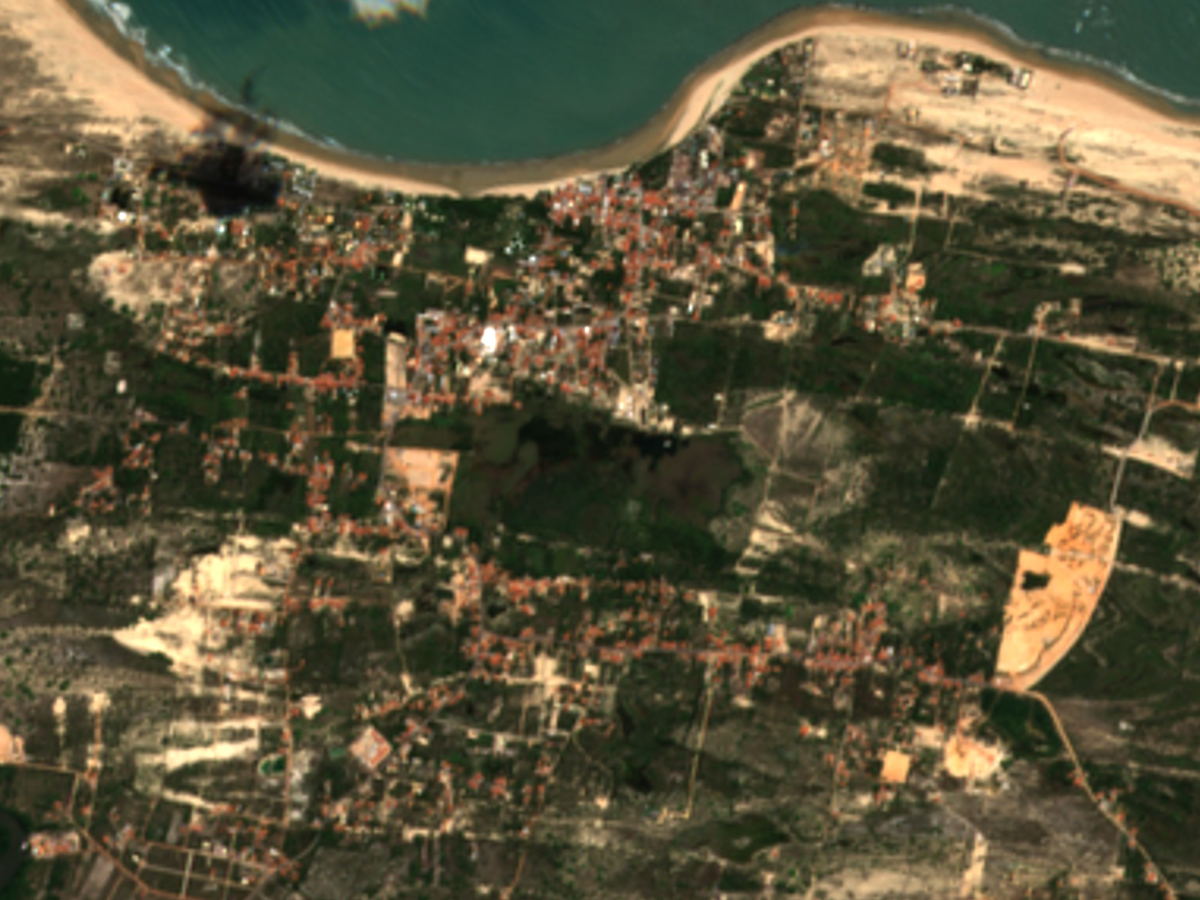
About Icaraí de Amontada
Icaraí de Amontada sits on a wide six-kilometre bay on the Ceará coast, roughly 180 kilometres northwest of Fortaleza. The bay faces NNE, and that orientation is exactly what makes it work: the NE-to-E trade wind drives in side-onshore across the water day after day through the peak season, laying down a consistent, powered-up window with daily wind probability above 90% from July through January. The village itself is a working fishing community, unhurried and relatively undeveloped, which keeps the beach uncrowded compared to the better-known Ceará spots further east. Most of what you need sits close to the waterfront — places to eat, a few bars, somewhere to sleep. For the launch, head to the western end of the bay toward Moitas rather than setting up in the heart of the village. The eastern headland provides some shelter near the village centre, which can soften the breeze in that section; the western edge keeps you in the full trade and gives you cleaner water to work with. From there, both wave riding and flat-water sessions are available depending on where in the bay you position yourself. The NNE-facing bay picks up whatever swell accompanies the trade, so the western exposure can run a short to medium wave, while sections tucked closer to the village typically flatten out. Wind runs 20 to 30 knots through the heart of the season, side-onshore from the NE-to-E quadrant. That's a substantial, consistent load — not a spot where you're watching the flags and hoping. It suits intermediate and experienced riders who can handle the power and make use of the directional riding the bay allows. If you're not yet fully independent in powered-up side-shore conditions, sorting some instruction before hitting the main run is the sensible call. The bay's length gives you real downwind options without running out of water quickly. Upwind recovery is workable given the side-onshore angle, but as with any working village bay, check what's on the beach and in the water before launching. On the ground: Cabana Kite and Caipi Bar are close to the action for a post-session drink. For food, Barraca do Haroldinho, Beira Mar, Brisa Bistrô, Banana Verde, and Adocica cover the meals side. BLUE BEACH Restaurante e Bar and Açai & Pub Lounge handle the bar-and-snack angle. Casa Arte Vida is the accommodation option to look at if you want to base yourself here for a week and properly clock the season. The peak window is July to January — come outside that range and the trades become less reliable.
Best Season
Check the Breeza app for the current rideable window at Icaraí de Amontada.
World Ranking
#55 worldwideRanked #55 worldwide — a kitesurf destination.
Facilities & Services
What's on the ground near the launch, mapped from open data:
Nearby spots to eat, drink & learn
- Chill Kite & Wing School Kite school
- De Praia Brasil Kite & SUP Lodge Kite school
- Kitesurf Icaraizinho Kite school
- Icaraizinho Kitesurf Kite school
- Pousada Icarai Kite house Kite school
- Chez Kite Icaraizinho Kite school
- Escola de Kite Club Janjão Kite school
- Voakite | Kitesurf School & Downwind Trips – Icaraí de Amontada Kite school
- Os Navegantes Kite & Host Icaraí Kite school
- Icarai Kite Village Kite school
- Kitexperiment - Icaraí de Amontada Kite school
- Sunset Bar e Restaurante Restaurant
- Coisa Nossa Restaurant
- Hibisco Restaurant
- Espaço Gourmet Icaraizinho Bistro - Restaurant
- Brisa Bistrô Restaurant
- Sabor da Casa Restaurant
- Posto 1 Bar / Café
- Casa Janjao Bar / Café
- Açai & Pub Lounge Bar / Café
- Cabana Kite Bar / Café
- Maui do Brasil Bar / Café
- Paraya Beach Bar / Café
- Pousada Canto do Sol Accommodation
- Pousada Icaraizinho Praia Accommodation
- Amana Icaraizinho de Amontada Accommodation
- Vila los Ventos Condominio Accommodation
- Casa Caiada Icaraí Accommodation
- Bougainville Icaraí Accommodation
- Vila Torem Hotel Accommodation
- Pousada País Tropical Accommodation
Facilities data © OpenStreetMap contributors
When is the best time to kitesurf at Icaraí de Amontada?
Timing depends on local conditions. Check the Breeza app for the current rideable window at Icaraí de Amontada — it reads the live forecast against your gear and level.
Is Icaraí de Amontada suitable for beginner kiters?
Suitability depends heavily on the day's conditions. Breeza reads your level alongside the forecast and gives you an honest verdict — including when it's a no.
What wind direction works at Icaraí de Amontada?
Six-km fishing village bay ~180 km NW of Fortaleza; the bay opens NNE. The NE... Breeza cross-references live wind direction against the spot's safe window to tell you if today's direction is rideable for your kite.
What kite size do you need at Icaraí de Amontada?
Kite size at Icaraí de Amontada depends on the day's wind strength and your weight. Most kiters rig between 10m and 14m. Breeza calculates the ideal size for your gear, so you know before you leave whether it's a go.
Is it safe to kitesurf at Icaraí de Amontada?
Safety at Icaraí de Amontada depends on conditions and your experience. Check for offshore-wind days, local hazards and emergency contacts before you launch. Breeza gives a rideability verdict that includes a safety flag when conditions are borderline for your level.
See if Icaraí de Amontada is ridable right now — wind, direction, and a verdict for your gear.
Free · iOS & Android
You've already got wind data — the hard part is knowing what it means for you. Most kiters end up checking two, three, four apps and still asking: can I actually go? Breeza was built by a kiter who had the same problem. Feed it your gear, weight and level and it tells you if Icaraí de Amontada is rideable right now. The answer, not the tabs.
Get the app Free on iOS and Android — see if Icaraí de Amontada is rideable right now.Nearby Kitesurf Spots
Sources
- https://www.icaraikitevillage.com/kite-school
- https://www.brisabistroicaraizinho.com.br/
- https://amanahoteis.com/
- https://www.voakite.com.br/cursos
- https://icaraizinhokitesurf.com/
- https://velhochicoicaraizinho.com/
- http://www.junduh.com.br/
- https://pousada-icaraizinho-kite-house.com/
- https://chez-kite-icaraizinho.negocio.site/?utm_source=gmb&utm_medium=referral
- http://depraiabrasil.com/
- https://www.casajanjao.com/
- https://www.voakite.com.br/
- https://osnaveganteskite.com.br/
- https://vilatoremhotel.com/
- http://www.icaraikitevillage.com/
- http://kitexperiment.com/
- http://bluekitecenter.fr/
- https://www.icaraideamontada.com.br/
- http://www.makenahotel.com.br/
- https://web.kite-and-windsurfing-guide.com/spots/kiteboarding-windsurfing-sup/icarai-de-amontada.html