Kitesurfing Agadir Bay
Souss-Massa, Morocco
Wind & Conditions
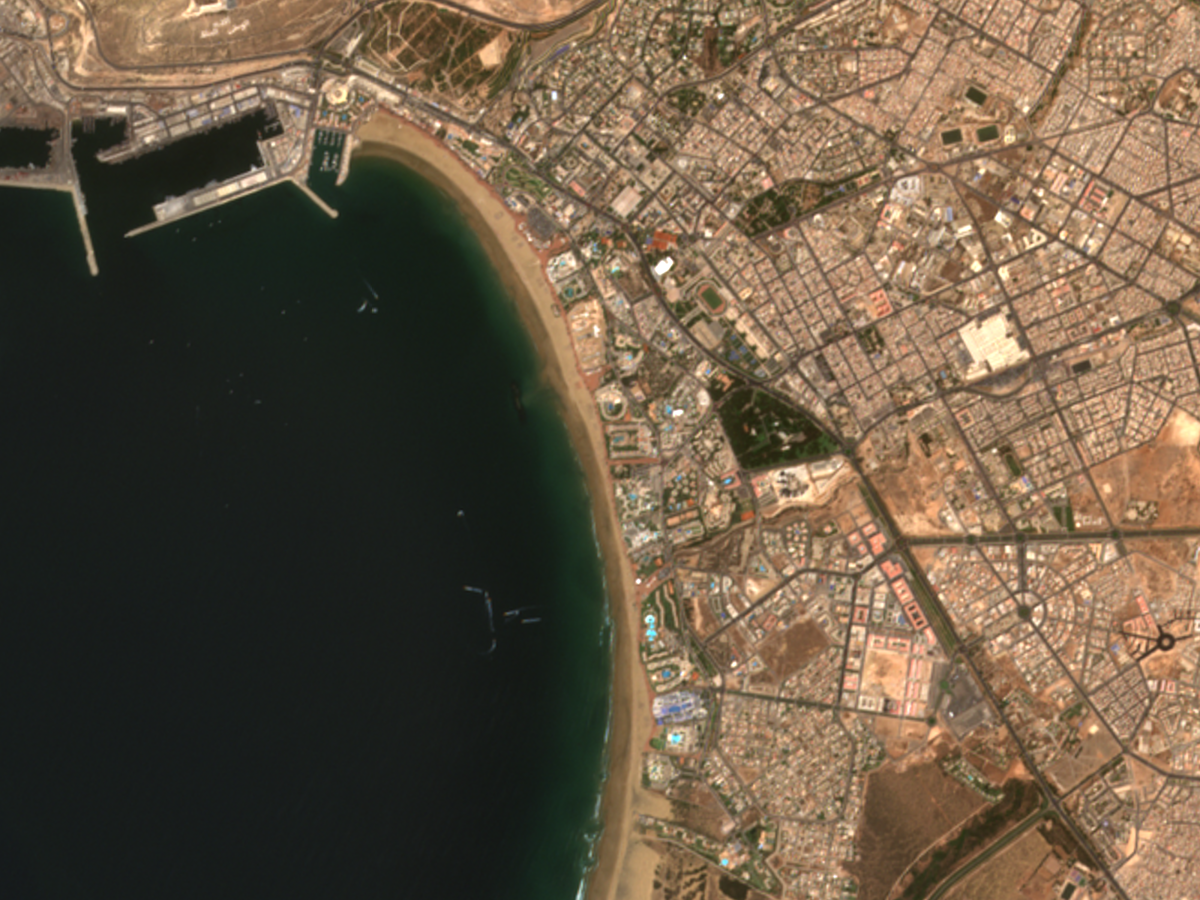
6 km sandy bay in the heart of Agadir. NW thermal wind 7–20 kn, typically from 13:00 onward, Mar–Oct. Lighter and more variable than Essaouira but wide beach, kite schools on-site, and sheltered from N swell. Good for learning. City amenities at hand.
About Agadir Bay
Agadir Bay sits in the Souss-Massa region of southwestern Morocco, a wide crescent of Atlantic coastline running roughly 6 kilometres along the city's seafront. The bay faces west into the open ocean, and the sandy beach is genuinely one of the more spacious launch environments on the Moroccan Atlantic coast — room to rig, room to body-drag, room to breathe. Getting there is easy. Agadir is a well-connected city and the beach runs right through the resort zone, so hotels, cafés, and accommodation are within walking distance rather than a drive away. Bo Hotel & Spa and a range of other options sit along the seafront. Once you're on the sand, kite schools are operating in the bay with lessons and gear rentals for all levels — you won't need to hunt far. The wind is a NW thermal that typically fills in from around 13:00 onward, running 7 to 20 knots on a good day. The usable window sits between roughly south-southeast and north-northwest (175°–355°). It's lighter and more variable than what you'd find at spots further north — this isn't a guaranteed blasting destination — but the lower end of the range and the wide open beach make it well-suited to learning and early intermediate work. The bay is sheltered from north swell, so the water tends to stay manageable rather than delivering confused chop from the outset. The main season runs March through October. Outside summer the beach has genuine space; in summer it fills with hotel guests, swimmers, sunbathers, banana-boats, and jet-skis. That water traffic is the primary hazard and it's serious — launching and riding from July through August requires constant situational awareness of everything sharing the water with you. Artificial breakwaters and harbour structures throughout the bay also create defined zones; know where these are before you head out and respect the boundaries. English is widely spoken along the bay, which makes logistics — lessons, gear rental, asking about conditions — straightforward for visiting riders. The broad beach gives kite schools actual space to run safe sessions, and if you're here to learn or lock in fundamentals in a city-comfortable setting, Agadir checks the boxes. For food and drink after a session, the Agadir Beach Club, Café Enjoy Agadir, and Agadir Beach Restaurants are all within reach. Bar a Tapas and Cafe El Hay are solid options if you want something casual. Campgrounds in Souss offer a budget stay if you'd rather be away from the resort strip. The wind isn't always the strongest on the Moroccan coast, but Agadir Bay gives you a long manageable beach, schools on-site, and a city that makes the non-riding side of a kite trip easy. For beginners or anyone wanting a lower-pressure environment to build technique, it's a sensible call from March through October — arrive around midday and be ready for patience on the lighter days.
Best Season
Check the Breeza app for the current rideable window at Agadir Bay.
World Ranking
RegionalNot globally ranked, but a kitesurf destination — a local favourite worth a check when the wind lines up.
Facilities & Services
What's on the ground near the launch, mapped from open data:
Nearby spots to eat, drink & learn
- AtlanticsurfPoint surf and kitesurf Agadir Kite school
- M-MOVE Surf, Kitesurf, Wingfoil Agadir Kite school
- Swell Surf Morocco - Surf & kitesurf school Kite school
- Poki Surf Morocco Kite school
- Surf Wing Foil School Agadir Kite school
- Kitesurfing Lessons in Tamraght, Morocco Kite school
- Private 2 hours Kitesurfing Lesson in Aït Melloul, Morocco Kite school
- Surf camp Morocco Kite school
- McDonald's ماكدونالدز Restaurant
- La Grillardière Restaurant
- Meduza Lounge Restaurant
- Kim Hoa Restaurant
- Restaurant La Lampara Restaurant
- Le Scala Restaurant
- Restaurant La Scala Restaurant
- Le Jardin d'Eau Restaurant
- Restaurant le 20 Agadir Restaurant
- Café Enjoy Agadir Restaurant
- Agadir beach bar drinks and Ocean Views Restaurant
- Le Monticule Bar / Café
- Bar a Tapas Bar / Café
- Maxwell Bar / Café
- Agadir Beach Club Bar / Café
- La Fontaine Bar / Café
- La Bodeguita Bar / Café
- Hôtel Dominium Palace Accommodation
- El Pueblo Tamlelt - All Inclusive Accommodation
- Hotel Riu Palace Tikida Agadir Accommodation
- Hotel Agadir Beach Club Accommodation
- Allegro Agadir Accommodation
- Hôtel Khalij Agadir Accommodation
- Dunes d'Or Ocean Club Accommodation
- Hotel Riu Tikida Beach Accommodation
- Golden Beach Appart'hotel Accommodation
- Atlantic Palm Beach Apart'Hotel Accommodation
- Agadir Accommodation
- Welcome to Camping Aourir Accommodation
Facilities data © OpenStreetMap contributors
When is the best time to kitesurf at Agadir Bay?
Timing depends on local conditions. Check the Breeza app for the current rideable window at Agadir Bay — it reads the live forecast against your gear and level.
Is Agadir Bay suitable for beginner kiters?
Suitability depends heavily on the day's conditions. Breeza reads your level alongside the forecast and gives you an honest verdict — including when it's a no.
What wind direction works at Agadir Bay?
6 km sandy bay in the heart of Agadir. NW thermal wind 7–20 kn, typically fro... Breeza cross-references live wind direction against the spot's safe window to tell you if today's direction is rideable for your kite.
What kite size do you need at Agadir Bay?
Wind at Agadir Bay tends toward moderate, so a 12–17m kite covers most sessions — adjusted for your body weight. Breeza works out the correct kite size for your setup and tells you whether today's conditions are actually worth rigging.
Is it safe to kitesurf at Agadir Bay?
Safety at Agadir Bay depends on conditions and your experience. Check for offshore-wind days, local hazards and emergency contacts before you launch. Breeza gives a rideability verdict that includes a safety flag when conditions are borderline for your level.
See if Agadir Bay is ridable right now — wind, direction, and a verdict for your gear.
Free · iOS & Android
You've already got wind data — the hard part is knowing what it means for you. Most kiters end up checking two, three, four apps and still asking: can I actually go? Breeza was built by a kiter who had the same problem. Feed it your gear, weight and level and it tells you if Agadir Bay is rideable right now. The answer, not the tabs.
Get the app Free on iOS and Android — see if Agadir Bay is rideable right now.Nearby Kitesurf Spots
Sources
- https://www.getmyboat.com/trips/JK7Q0VQa/
- http://surfwingfoil.com/
- https://travelpal.ai/destinations/africa/morocco/souss-massa/agadir/cafe-enjoy-av-mohamed-el-fassi
- https://www.getmyboat.com/trips/2NJGwGPa/
- https://www.takeyourbackpack.com/backpacking-in-morocco/visit-souss-massa/
- https://zephyrhotels.ma/zephyragadir
- https://www.prestigeagadir.com/
- http://www.lattelatte.ma/
- https://camping-aourir.com/
- https://www.dominium-hotel.com/
- https://atlanticsurfpoint.com/
- https://www.pickalbatros.com/palais-des-roses-agadir/restaurants-bars/beach-bar
- https://www.dominiumpalace.com/
- http://beachclub-agadir.com/
- http://www.goldenbeach.ma/
- https://swellsurfmorocco.com/
- https://www.pitchup.com/en-us/campsites/morocco/souss_massa/
- https://coupdefoudre.ma/
- https://www.m-move.com/
- https://www.barcelo.com/en-gb/allegro-agadir/?utm_source=google&utm_medium=organic&utm_campaign=my_business&utm_content=7388
- https://bythewaycoffee.com/
- http://www.lascalaagadir.com/
- https://www.lesblancsagadir.com/les-blancs-agadir-where-the-ocean-meets-the-art-of-dining.html
- https://coupdefoudre.ma/agadir-beach-restaurants.html
- https://www.riu.com/en/hotel/morocco/agadir/hotel-riu-tikida-beach?utm_source=google&utm_medium=organic&utm_campaign=my_business&utm_content=TBE
- http://atlanticpalmbeach.com/
- https://dadacuisineagadir.com/
- https://www.riu.com/en/hotel/morocco/agadir/hotel-riu-palace-tikida-agadir?utm_source=google&utm_medium=organic&utm_campaign=my_business&utm_content=XTA
- https://www.allcamps.ie/camping/morocco/agadir
- http://swellsurfmorocco.com/
- https://all.accor.com/a/en/destination/city/hotels-agadir-v4676.html
- https://www.elpueblotamlelt.com/
- https://www.lejardindeau.ma/
- https://acollectionhotels.com/fr/our-destinations/%20Agadir/resorts/DUNE-DOR-AGADIR
- https://explore-agadirsoussmassa.com/en/breakfast-in-the-souss-massa/
- http://www.le20.ma/
- https://www.hotelresidencerihab.com/
- https://web.kite-and-windsurfing-guide.com/spots/kiteboarding-windsurfing-sup/agadir-bay.html